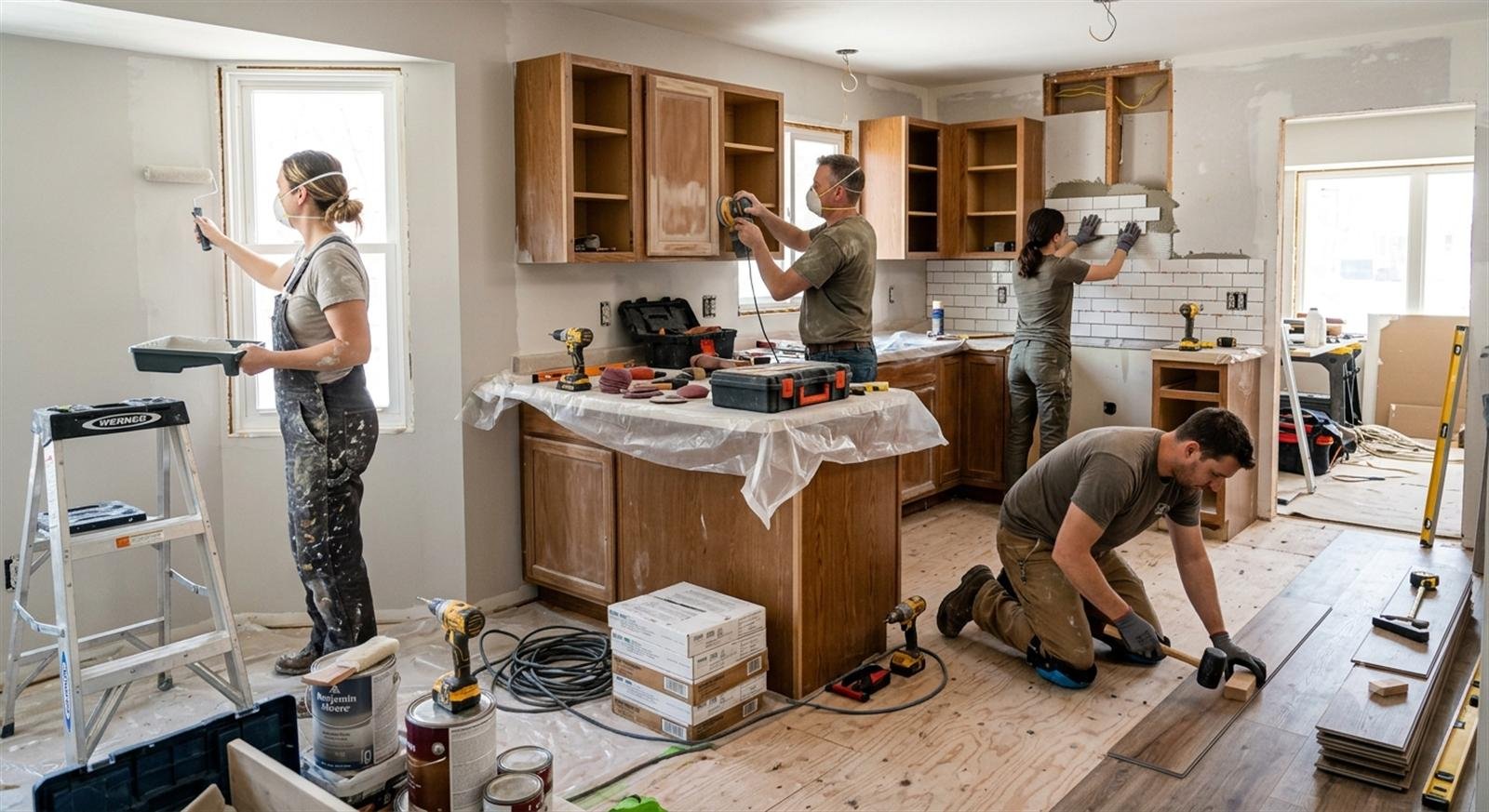
Interior & Exterior Painting
Preparation-led painting — filled, sanded, primed and cut in properly, because paint only looks as good as what is under it.
- Typical timeline
- 2–6 days
- Permits
- Not required
- Live in during work
- Yes, room by room
What's Involved
Paint, done properly.
Almost every disappointing paint job is a preparation problem rather than a painting one. Roller marks, flashing, peeling around trim and colour that looks patchy in daylight all trace back to what happened before the first coat went on.
- Full filling, sanding and caulking of walls and trim
- Priming, spot-priming and stain blocking where needed
- Interior walls, ceilings, trim, doors and closets
- Cabinet spraying and refinishing in a controlled setup
- Exterior siding, soffit, fascia, trim and doors
- Complete masking, floor protection and daily clean-up
What Moves The Price
Where the money actually goes.
Three things account for most of the variation between one paint quote and another. Knowing which of them applies to you is most of the budgeting.
-
1
How much preparation the surface needs
Sound walls take one day of prep. Peeling paint, water stains, wallpaper glue, textured ceilings or previously glossy trim all take considerably longer, and skipping any of it shows in the finish.
-
2
Ceilings and trim, not walls
Walls are the fastest surface in the house. Ceilings, doors, casings and baseboards are where the hours go — cutting in, multiple thin coats and careful sanding between them.
-
3
Number of colours and finishes
Each additional colour means another cut line, another set-up and another dry cycle. Two well-chosen colours through a house is quicker and usually looks better than six.
Timeline
How a paint project runs.
-
Preparation and repair
1–2 daysFurniture moved and masked, holes and cracks filled, trim caulked, glossy surfaces de-glossed and everything sanded back.
-
Priming
1 dayFull or spot priming, with stain-blocking primer wherever there is water damage, tannin bleed or a heavy colour change.
-
Finish coats
1–2 daysTwo coats to walls and ceilings, with proper dry time between them rather than rushing the second.
-
Trim and touch-up
1 dayDoors, casings and baseboards finished, masking removed, and a walkthrough with you to mark anything for touching up.
Worth Knowing
What goes wrong in paint projects.
Not a sales pitch — these are the three failures we get called in to fix most often. Ask any contractor you are considering how they handle them.
-
Painting over dirty or glossy surfaces
Paint bonds to what it touches. Over kitchen grease, dusty trim or an un-sanded gloss it will look fine for a month and then chip at every contact point.
-
No primer over repairs
Filler and fresh drywall absorb paint differently to the wall around them. Without spot-priming, every patch reads as a dull halo once the light hits it from an angle.
-
Rushing the masking
Nearly all the visible quality in a paint job is at the edges — where wall meets ceiling, trim and floor. Masking and cutting in is slow, unglamorous, and exactly what separates a good job from an obvious one.
How We Work
Four steps, no surprises.
-
01
Walkthrough
We come to you, measure up and talk through what you actually want out of the space — and what it realistically costs.
-
02
Fixed quote
A written, itemised scope with a fixed price and a start date. Nothing begins until you have signed it.
-
03
The build
One project manager, one schedule, dust protection up and a tidy site at the end of every day.
-
04
Handover
We walk the finished job with you, fix the snag list, and leave you the warranty in writing.
Paint Questions
Answers before you ask.
How soon can I put furniture back and hang pictures?
Furniture back the same evening, generally. Paint is touch-dry in hours but takes up to two weeks to fully cure, so avoid scrubbing walls or pressing anything hard against them for a couple of weeks.
Do you move the furniture?
Yes. We move and centre what is movable, cover it, and mask floors and fittings. For very heavy or fragile items we will agree beforehand whether they are moved or worked around.
Which sheen should I use where?
Matte or eggshell on walls hides imperfections best. Kitchens, bathrooms and hallways benefit from a scrubbable eggshell or satin. Trim and doors in semi-gloss, so they wipe clean and read as crisp against the walls.
Can you spray kitchen cabinets?
Yes, and it is one of the highest-value things you can do to a dated kitchen. Doors come off and get sprayed properly, frames are done in place with full masking. Preparation and de-greasing decide how long it lasts.
Other things we do
Want a real number for your paint project?
Free walkthrough, fixed written quote, no obligation to go ahead.