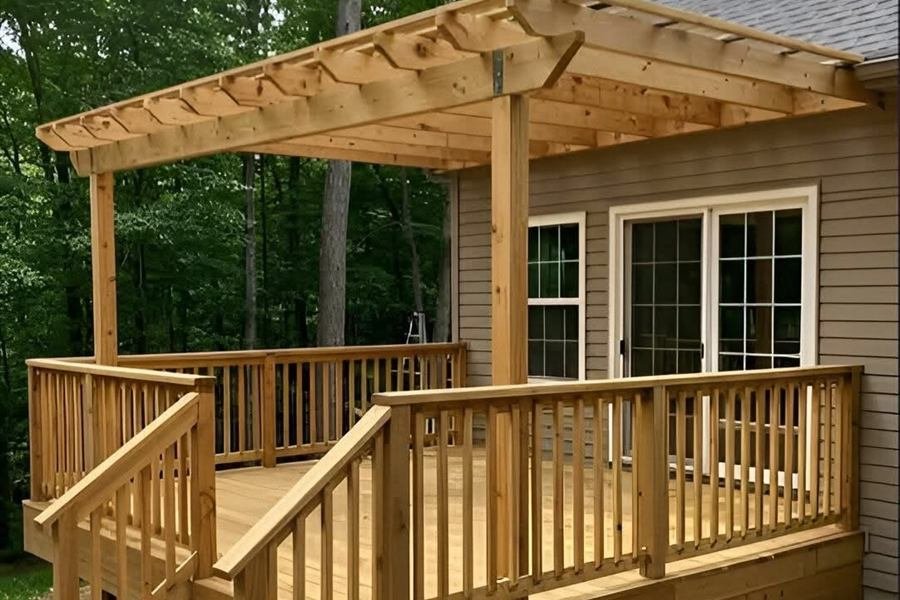
Decks & Outdoor Structures
Decks, pergolas and porches built to code, permitted where required, and framed to outlast the boards on top.
- Typical timeline
- 1–3 weeks on site
- Permits
- Usually, if raised or attached
- Live in during work
- Yes, throughout
What's Involved
Decks, done properly.
A deck is a structure, not a surface. What decides whether it is still solid in twenty years is entirely underneath the part you can see — the depth of the footings, how the ledger is attached to the house, and whether that connection is flashed.
- Footings excavated below the frost line and inspected
- Pressure-treated framing with correct span and joist spacing
- Ledger attachment with proper flashing into the wall assembly
- Cedar, pressure-treated and composite decking
- Railings, stairs, privacy screens and skirting
- Pergolas and shade structures, with permit drawings where required
What Moves The Price
Where the money actually goes.
Three things account for most of the variation between one decks quote and another. Knowing which of them applies to you is most of the budgeting.
-
1
Height off the ground
A ground-level deck is straightforward. Once it is raised, you are into guards, stairs, engineered footings and a permit — and the framing beneath gets substantially more involved.
-
2
Decking material
Pressure-treated is the most economical and needs regular maintenance. Cedar looks and feels better and weathers gracefully. Composite costs the most up front and asks almost nothing of you afterwards.
-
3
Railings and stairs
Railings are priced per linear foot and vary hugely between pressure-treated pickets, aluminium and glass. Stairs are the most labour-intensive element of any deck, and stringer layout has to be exact.
Timeline
How a decks project runs.
-
Design and permit
2–6 weeksLayout, framing plan and the permit application where one is required. Approval times vary considerably between municipalities.
-
Footings
1–2 daysHoles excavated below frost line, inspected where required, then poured or set with the posts positioned.
-
Framing
2–4 daysLedger fixed and flashed, beams and joists installed to correct span, and the frame checked square and level throughout.
-
Decking and railings
3–5 daysBoards laid to the correct gapping, then railings, stairs, fascia and any privacy screening.
Worth Knowing
What goes wrong in decks projects.
Not a sales pitch — these are the three failures we get called in to fix most often. Ask any contractor you are considering how they handle them.
-
Footings that do not reach below frost line
Ontario frost heave will lift a shallow footing and take the whole deck with it. It shows up as a deck that moves seasonally, twists away from the house, and cannot be corrected without rebuilding from the ground.
-
A ledger bolted on without flashing
This is the detail that rots houses. Water runs down the wall, gets behind an unflashed ledger and into the rim joist. By the time it is visible inside, the structural damage is done.
-
Composite installed like timber
Composite boards expand and contract more than wood and have manufacturer-specified gapping and fastening. Installed with timber spacing they buckle in summer, and it voids the warranty.
How We Work
Four steps, no surprises.
-
01
Walkthrough
We come to you, measure up and talk through what you actually want out of the space — and what it realistically costs.
-
02
Fixed quote
A written, itemised scope with a fixed price and a start date. Nothing begins until you have signed it.
-
03
The build
One project manager, one schedule, dust protection up and a tidy site at the end of every day.
-
04
Handover
We walk the finished job with you, fix the snag list, and leave you the warranty in writing.
Decks Questions
Answers before you ask.
Do I need a permit for a deck?
In most GTA municipalities, yes if it is attached to the house or raised above a certain height above grade — commonly around 24 inches, though it varies. Low, free-standing platforms often do not. We confirm with your municipality before quoting.
Cedar or composite?
Cedar costs less up front, looks and feels better underfoot, and needs cleaning and sealing every year or two. Composite costs more initially and needs essentially nothing afterwards. Over fifteen years the totals are closer than they first appear.
How long should a deck last?
A pressure-treated frame on proper footings should last decades. The surface is what wears — untreated cedar boards perhaps 15 to 20 years with maintenance, composite typically longer. Which is why the framing is worth spending on.
Can you build a deck over an existing concrete patio?
Often yes, using sleepers or adjustable pedestals, provided the concrete is sound and there is enough height at the door threshold. It avoids excavation entirely and is usually quicker. We check drainage under it first.
Other things we do
Want a real number for your decks project?
Free walkthrough, fixed written quote, no obligation to go ahead.